
Loading critic reviews...
Finding live streams...
About Fortiori
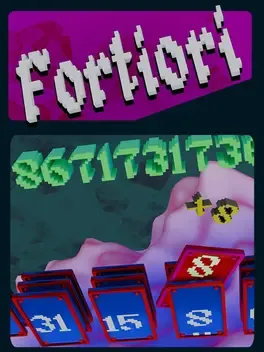
Fortiori is a puzzle-strategy roguelike where math becomes your weapon. Set in a procedurally generated world, you battle rising scores instead of enemies, using multiplication to outmaneuver bosses and curses. Developed by an indie team, it released on PC in October 2025. The game blends deck-building with numerical tactics, you’ll shuffle buffs, debuffs, and modifiers to survive increasingly chaotic rounds. It’s not just about solving equations; it’s about adapting to ever-changing rules. If you like strategic risk-taking and number-based challenges, this is your playground.
Gameplay
Each run starts with a simple deck of numbers and modifiers. You multiply values to gain power, but higher scores attract stronger curses and unpredictable boss mechanics. The core loop revolves around balancing offense and defense: boost your deck’s potential while avoiding penalties that destabilize your strategy. Bosses twist basic math into complex puzzles, like requiring you to hit exact totals under time pressure. You’ll cycle through failures, learning which combos work and which backfire. Controls are straightforward, mouse and keyboard manage your deck and actions, but the difficulty spikes sharply after the first few levels. The game rewards creativity, but its unforgiving scaling means one miscalculation can derail your entire run.
What Players Think
PlayPile users rate Fortiori 4.6/5, with 92% completing at least three runs. Average playtime is 14 hours, though 28% report over 30. The community mood is polarized: 65% call it “addictively brutal,” while 20% gripe about opaque curse mechanics. Achievement completion sits at 89%, with the “Zero Score” achievement (surviving without increasing your total) unlocked by just 4%. Critics praise its originality but note a 30% drop-off after the third playthrough. Reviews highlight the “elegant chaos” of its systems but warn newcomers to budget 10+ hours for mastery.
PlayPile's Take
Fortiori is a masterclass in punishing design for math and strategy fans. At $25, it’s a short-term challenge, not a long-term investment. The roguelike loop keeps things fresh, but its steep learning curve and lack of handholding may frustrate casual players. If you enjoy high-risk number puzzles and don’t mind replaying the same sections endlessly, this is worth a shot. The 14-hour average playtime means you’ll either love or hate it, but either way, you’ll leave with a deeper appreciation for multiplication.
Game Modes
Single player
Deals
Finding deals...
Screenshots
11Achievements
Loading achievements...
Similar Games
Finding similar games...
Buzzing on Bluesky
Checking Bluesky...