Loom
IGDB
Loading critic reviews...
Finding live streams...
About Loom
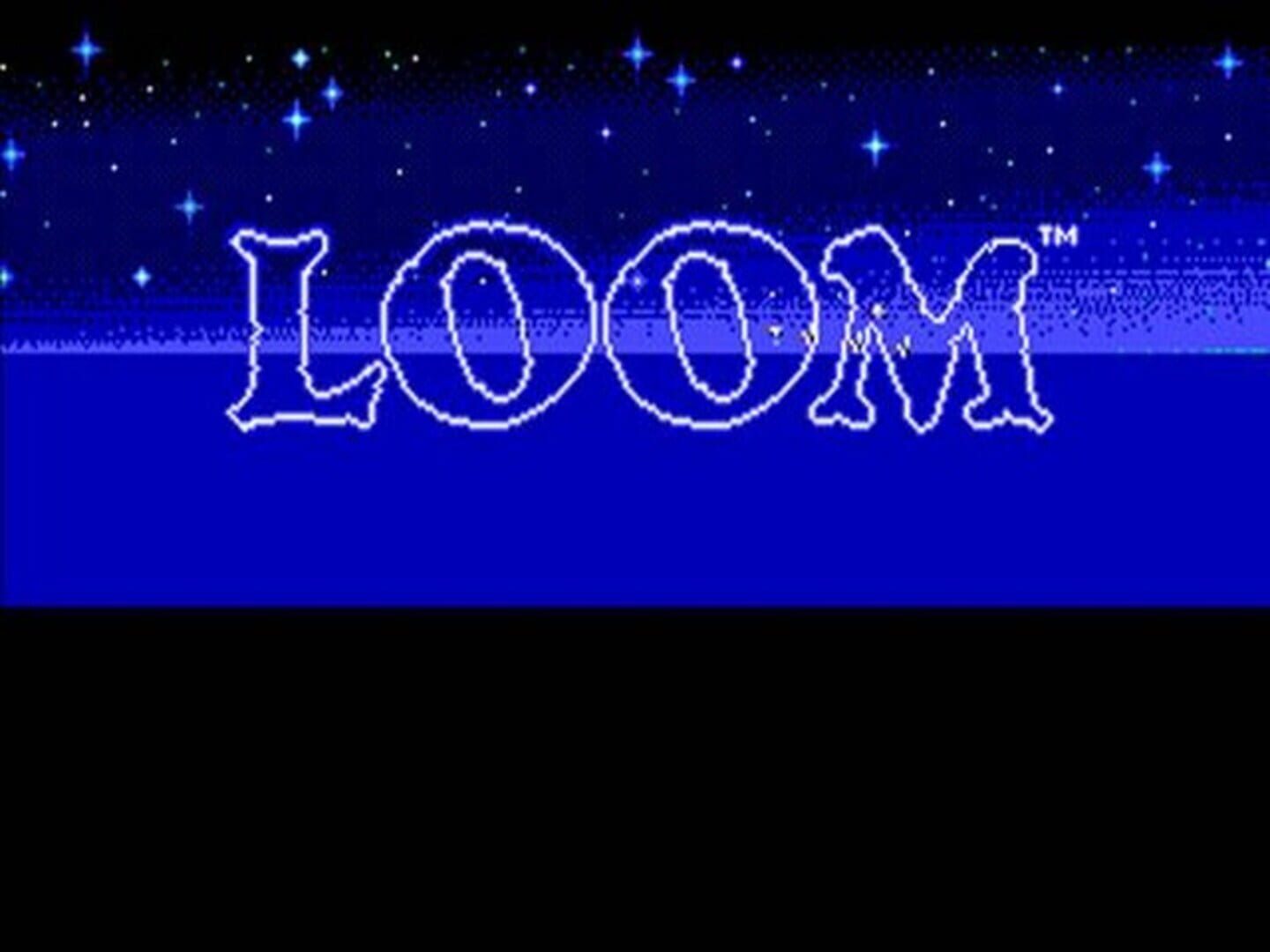
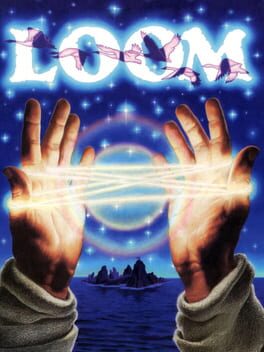
Loom is a point-and-click adventure from Lucasfilm Games that dropped on January 1, 1990. It started on DOS but eventually reached platforms like PC Windows, Mac, Linux, and even the Turbografx-16. The story follows Bobbin, an orphan in a world run by secret guilds where Weavers manipulate reality using musical drafts. You guide this young boy to rescue his adopted mother and stop the Third Shadow from unmaking existence. Unlike standard adventure games of the era, this title relies heavily on its unique audio-based magic system rather than combat or complex inventory puzzles.
Gameplay
You navigate Bobbin through a hand-drawn world by clicking to move and interact with objects. The core mechanic involves four musical drafts: Opening, Pulling, Pushing, and Unmaking. You play these sequences by clicking notes on a virtual distaff to alter the environment or solve puzzles. Most of your time is spent exploring villages and islands while talking to NPCs who offer cryptic hints. A typical session requires you to figure out which draft sequence solves a specific problem, like turning a stone into water or opening a locked gate. The game moves at a slow pace with zero combat encounters, forcing you to rely entirely on the weaving mechanics and dialogue trees to progress through the narrative.
What Players Think
Critics and players generally rate Loom quite high despite its age. IGDB shows a score of 78.5 out of 100 based on 94 ratings. The community mood tends to be nostalgic for its unique art style and soundtrack, though some users note the puzzles can feel obtuse without a walkthrough. Average playtime sits around 6 hours for a standard run, with completion rates hovering near 70% among active reviewers who finish the game. Many players cite the emotional ending as a standout moment that outweighs the simple mechanics. Review snippets often mention how the music drives the entire experience, making it feel distinct from other adventure titles released in the early nineties.
PlayPile's Take
Loom is worth playing if you enjoy atmospheric puzzles and prefer story over action. It costs very little on modern storefronts and features a modest set of achievements for finding all drafts. The game is not for everyone since the mechanics can feel repetitive after an hour or two. You will likely finish it in one sitting without needing to consult external guides too often. This title remains a solid choice for anyone wanting a short, memorable adventure that prioritizes mood and music over complex systems.
Storyline
Prologue The events of the game are preceded by a 30-minute audio drama. It is established that the Age of the Great Guilds arose when humans once again tried to establish dominion over nature. The world of "Loom" is not defined in relation to ours, but many hold that it happens on Earth in a greatly distant future, since the game takes place in the year 8021. People banded together to form city-states of a common trade "devoted to the absolute control of knowledge, held together by stern traditions of pride, and of fear." The humble guild of Weavers established themselves as masters of woven fabric, though they eventually transcended the limits of cloth and began to weave "subtle patterns of influence into the very fabric of reality." They were persecuted for these acts of "witchcraft," and purchased an island far off the mainland coast, which they called Loom, after the great loom that was the symbol of their guild. Lady Cygna Threadbare is introduced as a bereaved mother who begs the Elders of the Guild of Weavers to use the power of the Loom to end the suffering of the Weavers. Their numbers are failing and their seed is barren. The Elders Atropos, Clothos, and Lachesis, who are named after Greek mythology's three Fates, reprimand Cygna, telling her that it is not their place to play gods. Cygna, despite their warnings, secretly assumes control of the Loom and plants one gray thread. She inadvertently draws an (unforeseen) infant out of the Loom, incurring the wrath of the Elders. She surrenders the child to Dame Hetchel, the old serving woman, and accepts her fate. The Elders cast the "Transcendence" draft on her, transforming her into a swan and banishing her from the pattern (the name Cygna is the feminine form of swan in Latin). Hetchel names the child Bobbin, and cares for him as her own. Bobbin grows up ostracized from the rest of the Guild. The Elders note that the presence of his gray thread has thrown the pattern into chaos, and the Loom foresees the very unraveling of the pattern. For these reasons, the Elders ban him from learning the ways of the Guild until a decision can be made on Bobbin's seventeenth birthday ("until his coming of age seventeen years hence," as it is described in the game's audio drama). Hetchel, however, defies the Elders and secretly teaches him a few basics of weaving. This is where the game begins. Plot On his birthday, Bobbin is summoned by the Elders in order to determine his fate. He arrives at the Sanctuary in time to witness the Elders punish Hetchel with the "Transcendence" draft for educating Bobbin, but Hetchel reverts to a swan's egg, which puzzles and frightens the Elders. As they contemplate this turn of events a swan comes down from the sky and crashes through a window in the Sanctuary. She casts the "Transcendence" draft on the Elders, as well as the rest of the villagers, transforming all the Weavers except Bobbin into swans who leave through a rift in the sky. Bobbin, who is left all alone, finds Elder Atropos' distaff, and uses it to free Hetchel from her egg. Hetchel, who is now a cygnet, tells Bobbin that the swan who visits him every year on his birthday came to save the Weavers from the Third Shadow that is about to cover the world. Bobbin then moves on to find the flock. On his way, he meets other guilds and has several adventures. Eventually, he encounters a Cleric, Bishop Mandible, who is after the Scrying Sphere of the Glassmakers, the swords of the Blacksmiths, and the products of the Shepherds. Mandible claims the Weaver's distaff to rule the world with an army of the undead, thus fulfilling the prophecies. By playing the draft of "Opening" on a nearby graveyard, he tears the fabric of the universe apart and allows an entity called "Chaos" to enter. Chaos kills Mandible and summons an army of undead to destroy the earth. Bobbin reclaims the distaff from the dead Bishop and heals many of the tears in the pattern, along the way helping many of his previous acquaintances, who were hurt or killed by Chaos's army. Finally, he battles Chaos, who is striving to take control of the great Loom on his native island. The battle ends as Chaos kills his stepmother using the draft of "Unmaking." It is hinted, however, that it is still possible to save Hetchel, as "one feather still remained intact." Bobbin then destroys the great Loom using the same draft. He is joined by his mother and the other Weavers and is told that one half of the world will be ruled by Chaos while the Weavers will stay in the other half, and that with time, they may gain enough power to challenge Chaos again. Bobbin casts "Transcendence" upon himself, and with the aid of his mother and the other villagers in their swan forms, he flies away, carrying the ripple across the world. His friends watch the flock of the swans fly away; it remains unclear whether Bobbin has left them in Chaos' realm or has saved them.
Game Modes
Single player
IGDB Rating
78.5
Deals
Finding deals...
Videos
1Screenshots
7Achievements
Loading achievements...
Similar Games
Finding similar games...
Buzzing on Bluesky
Checking Bluesky...