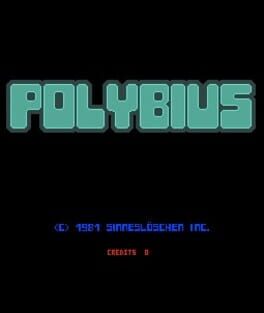
Polybius
Loading critic reviews...
Finding live streams...
About
Polybius is a 1981 arcade shooter that never officially existed but became a viral mystery. Developed under Sinneslöschen Corporation’s name, it allegedly appeared in Portland-area arcades for a month before vanishing. The gameplay is often compared to Tempest’s side-scrolling shooter format but with a twist: early prototypes spun the tunnel walls while keeping the player stationary. This caused motion sickness in testers, leading to adjustments. The game’s mechanics remain unclear due to its rumored deletion, but the premise revolves around navigating a shifting maze while fending off enemies. What sticks about Polybius isn’t the gameplay but the lore. Stories claim it attracted kids with eerie cabinets that operated without coins, while suited figures monitored players. Dozens reported nausea, migraines, and emotional numbness afterward. Some called it a government mind-control experiment, others a cursed entity. The Tempest developers hinted at abandoned designs that caused similar issues, suggesting Polybius might be a warped memory of real playtesting gone sideways. With no surviving units and only forum debates to dissect, it’s equal parts tech horror and urban legend.
Storyline
The legend of Polybius is, as legends tend to be, rather amorphous, and there are many different versions of the tale. The main ingredient is the game itself, a seemingly innocent cabinet that popped up and hides sinister motives, from subliminal messages to more supernatural activities. Often, the game is described as playing like the 1980 classic Tempest, but sometimes the gameplay itself isn't actually described. Early versions depict Polybius as a vague government experiment, presumably related to mind control in the same vein as MKULTRA and similar experiments. Kids lined up to play the strange game, with mysterious men in black suits either standing by and taking notes on clipboards, or coming by after hours to collect the data direct from the console. Soon, the players started to experience disturbing symptoms — nausea, migraines, memory loss, nightmares, and in some retellings even "an inability to become sad". Many players swore off games altogether, with one even becoming "a big anti-video game crusader or something". Others portray the game as more outright malevolent and possibly alive, with spooky details like occasionally not requiring coins to play, continuing to work after being unplugged/shut down, and other creepiness. At any rate, in nearly all versions it disappeared entirely off the face of the Earth after only a month or so. Perhaps of note, the developers of Tempest are on record as saying that early versions of the game featured the tunnel spinning while the player's ship/lane remained in place, rather than the other way around as it was in the final release game. This was changed due to the spinning tunnel causing vertigo and motion sickness in some playtesters. If any test units of the early game were ever in public, or if talk of a "game that makes you sick when you play it" were to emerge from playtesting, this could be the kernel of mundane truth on which the wild stories were based. In such a scenario, the "men in black" / government agents would be nothing more than the game developers getting reporting data from the cabinets and feedback from the players for their game in testing.
Game Modes
Single player
Deals
Finding deals...
Achievements
Loading achievements...
Similar Games
Finding similar games...
Buzzing on Bluesky
Checking Bluesky...