OpenCritic
Strong
IGDB
Players
OpenCritic Score
Score Distribution
"It’s great to see Cotton 100% come over to the West in such a big way. In 2021 we were lucky to receive 5 games in the Cotton series on Nintendo Switch. As someone who never got to appreciate the series before it has kinda made me feel like a kid again. I was getting to experience these games for the very first time as if I was playing them on their old retro systems of origin. The trouble is, it really feels like these games should have been released as a collection as opposed to a separate release. The price point also just feels a bit high making these appeal more to the dedicated Cotton fans over an impulse purchase for gamers testing the water for the first time. There have been several retro re-releases from the likes of M2 and Hamster that have released individual retro games cheaper and on some occasions more options. If you do want to test out this series Cotton 100% is a good place to start or Cotton Reboot released earlier this year."
Finding live streams...
About TIS-100
Zachtronics dropped TIS-100 on PC, Mac, and Linux back in July 2015. This puzzle simulator asks you to fix broken code segments on an ancient, fictional computer system called the TIS-100. You are not building a world or fighting monsters. You are writing actual assembly-like instructions to make processors talk to each other. The game treats your screen like a grid of tiny chips that need data flowing between them correctly. It feels less like a video game and more like a coding interview from hell, but one you can play at your own pace.
Gameplay
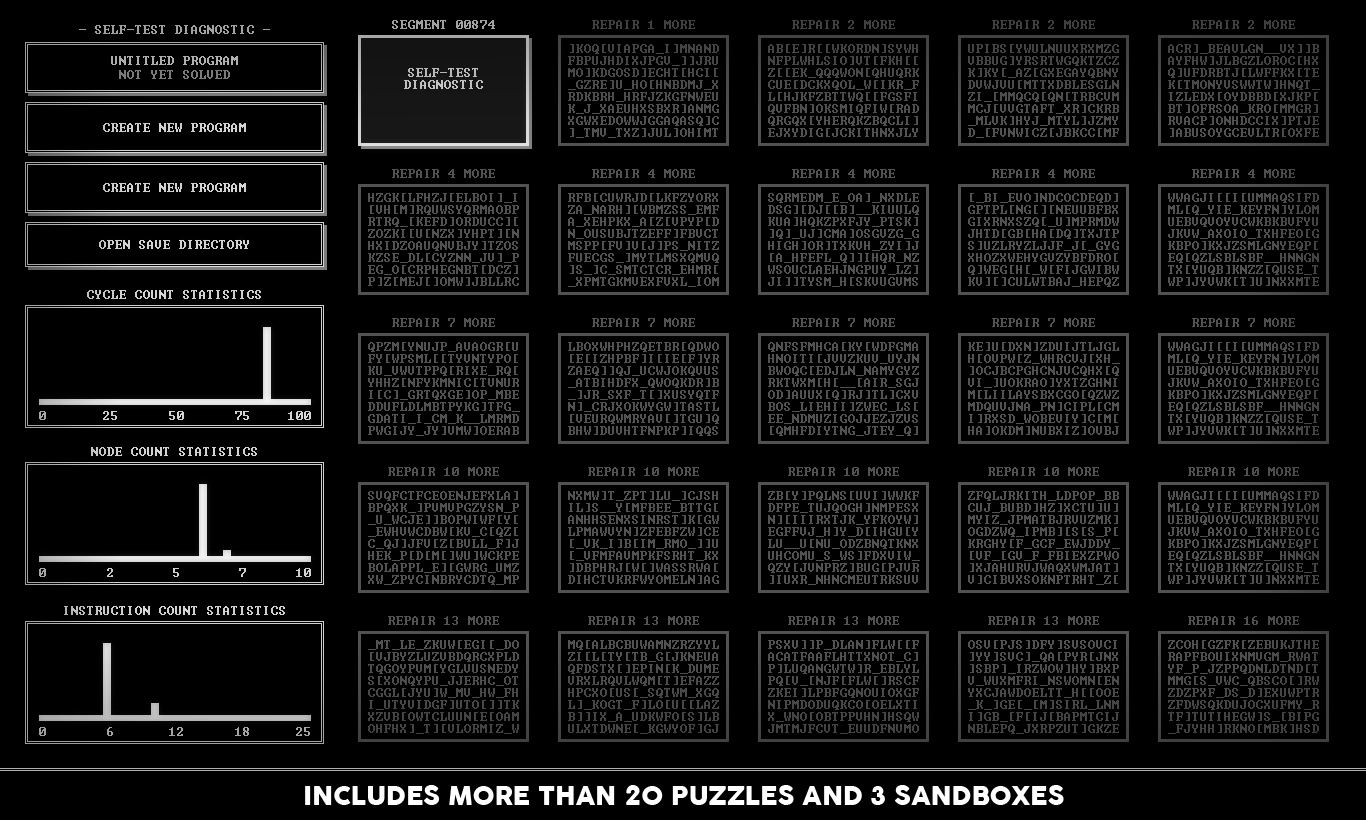
You stare at a grid of rectangular nodes representing different processors. Each node has limited memory slots and executes a single line of code per tick. Your job is to write instructions for every processor in the grid so they pass data back and forth without crashing or losing packets. You type commands like LOAD, STORE, JMP, and MOV to manage the flow. Sessions often involve hours of trial and error as you debug why a specific node is stuck or producing garbage output. There are no tutorials that hold your hand. You get a corrupt file and must figure out the logic yourself. The interface is purely text based with zero graphics beyond the code editor itself.
What Players Think
The PlayPile community rates this title with a solid 70.4 out of 100 from fifteen IGDB ratings. Players generally find the difficulty steep, which shows in our stats. The average playtime sits high because people struggle to finish the early chapters without help. Only 15.6% of players have unlocked the standard set of ten achievements. The rarest badge is "100_PERCENT_V2" with just a 1.20% unlock rate. Community moods skew heavily toward frustration mixed with intense satisfaction when a puzzle finally clicks. Critics agree it is hard, but those who push through often consider it a masterpiece of logic design.
PlayPile's Take
TIS-100 costs money for PC and works on Linux or Mac. It targets people who actually enjoy debugging assembly code. If you need hand holding or visual flair this game will feel like punishment. The low completion rates prove many quit before the end. You should buy it only if you want to stress test your problem solving skills. Do not expect a fun time unless you love watching data move through registers.
Game Modes
Single player
IGDB Rating
70.4
RAWG Rating
3.6
Deals
Finding deals...
Videos
1Screenshots
5Achievements
Loading achievements...
Similar Games
Finding similar games...
Buzzing on Bluesky
Checking Bluesky...