Legacy of Kain Returns: Defiance Remastered and New 2D Game Announced
The Legacy of Kain franchise is coming back from the dead, and for once, that sentence isn't a vampire pun. Crystal Dynamics and the newly involved Psyonix-adjacent studio handling the remaster hav...
February 28, 2026 · 8 min read
Been gaming since the PS1 days. I have opinions and I'm not afraid to share them. If a game respects my time, I'll respect it back.
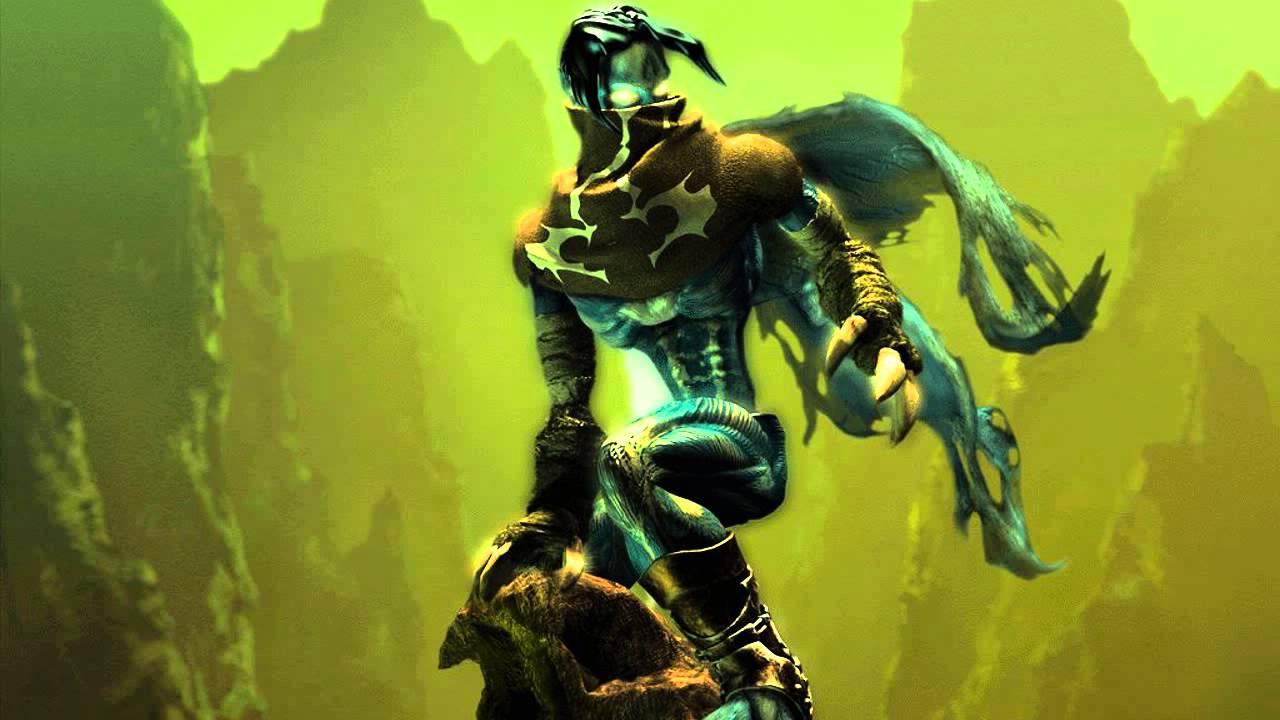
The Legacy of Kain franchise is coming back from the dead, and for once, that sentence isn't a vampire pun. Crystal Dynamics and the newly involved Psyonix-adjacent studio handling the remaster have announced two projects: a remaster of Legacy of Kain: Defiance and an entirely new 2D side-scrolling game set in the Nosgoth universe. For fans who've been waiting over two decades for this series to get the attention it deserves, this announcement feels like vindication.
A Franchise That Time Forgot

Legacy of Kain: Soul Reaver 2 Remastered
Crystal Dynamics · Aspyr Media
Dec 10, 2024
Experience Legacy of Kain: Soul Reaver 2 in original form or with remastered graphics. Soul Reaver 2 picks up where Legacy of Kain: Soul Reaver le…
To understand why this matters, you need to understand what Legacy of Kain was. The series started in 1996 with Blood Omen: Legacy of Kain, a top-down action RPG about a nobleman named Kain who gets murdered, resurrected as a vampire, and sets out on a revenge quest that spirals into something far more complex. It was dark, wordy, and genuinely well-written at a time when most game narratives were an afterthought.
Then came Soul Reaver in 1999, and the series transformed. You played as Raziel, a vampire lieutenant betrayed by Kain and cast into the abyss, only to return as a wraith with the ability to shift between the material and spectral realms. The game was a revelation. A Metacritic score of 91 reflects a game that married Zelda-style exploration with gothic horror atmosphere and a script that quoted Shakespeare without embarrassment. The voice performances from Simon Templeman as Kain and Michael Bell as Raziel remain some of the finest in gaming history.
Soul Reaver 2 continued the story in 2001, deepening the time-travel narrative and the philosophical conflict between Kain and Raziel. Blood Omen 2 arrived in 2002 as a more combat-focused entry that split the fanbase. And then came Legacy of Kain: Defiance in 2003, the last original entry in the series, which let players control both Kain and Raziel as their storylines converged.
After Defiance, nothing. The franchise went dormant. A multiplayer spinoff called Nosgoth appeared briefly in 2015 and died in early access. Fans organized petition campaigns. Speedrunning communities kept the games alive on Twitch. But officially, Legacy of Kain was over. Until the Soul Reaver 1 and 2 Remaster landed in late 2024 and proved there was still a massive audience for this world.
Defiance Remastered: Completing the Collection
The Defiance remaster follows the template established by the Soul Reaver remasters. Updated visuals, improved controls, quality-of-life enhancements, and respect for the source material. The original Defiance scored a 70 on Metacritic and an 81 on IGDB, a gap that reflects a game with excellent narrative and atmosphere but some genuine gameplay issues that critics rightfully called out.
The camera was Defiance's biggest problem in 2003. Fixed angles that fought the player, awkward transitions between rooms, and combat encounters where you couldn't see half the enemies attacking you. The remaster reportedly addresses this with a fully controllable camera system, which alone would fix the most persistent complaint about the original.
Combat is also getting attention. Defiance introduced a more combo-heavy system compared to Soul Reaver's simpler approach, and the remaster is refining the feel without fundamentally changing the mechanics. Kain's sections played differently from Raziel's, with Kain favoring telekinetic abilities and brute force while Raziel relied on spectral powers and agility. That duality was Defiance's greatest strength, and preserving it while modernizing the controls is the right call.
Visually, the team is working with the original art direction rather than reimagining it. Nosgoth has a specific look: decayed gothic architecture, sickly green and purple lighting, and environments that feel diseased. The Soul Reaver remasters proved this aesthetic translates beautifully to modern hardware when treated with care. Defiance's environments were more varied, spanning ancient vampire citadels, demonic dimensions, and ruined human settlements. Updated lighting and texture work should make these locations feel newly oppressive.
The voice performances are untouched, and that's the correct decision. Templeman and Bell's work as Kain and Raziel is iconic. Re-recording would be pointless and offensive. The original audio has been cleaned up and remastered, preserving the performances while improving clarity. Tony Jay's portrayal of the Elder God remains one of the most imposing vocal performances in the medium, and hearing it with modern audio quality is going to be something.

The New 2D Game
This is the announcement that genuinely surprised me. A new Legacy of Kain game, not a remaster, set in Nosgoth and built as a 2D side-scroller. Details are limited, but what's been revealed suggests a game that draws from the Metroidvania tradition while incorporating the series' signature realm-shifting mechanic.
The player character hasn't been confirmed as Kain or Raziel. Early artwork suggests a new protagonist, which makes narrative sense given where Defiance's story ended. The 2D perspective allows the spectral/material realm shift to function as a visual layer system, where flipping between realms reveals hidden paths, changes platform layouts, and alters enemy behaviors. Soul Reaver did this in 3D back in 1999. Translating it to 2D, where the visual contrast can be more immediately striking, is a smart design choice.
The art style appears to be hand-drawn, with a dark fantasy aesthetic that channels the series' roots. Screenshots show environments dripping with the same decayed grandeur that defined Nosgoth, rendered in a style that recalls Castlevania: Symphony of the Night through a Kain-specific lens. The comparison is inevitable, and the developers seem to be embracing it rather than running from it.
Combat details are sparse, but the emphasis on melee weapons and supernatural abilities aligns with series tradition. The Reaver blade will almost certainly make an appearance in some form. Whether the game adopts a more precise, skill-based combat system or leans into the power fantasy of playing as a vampire lord remains to be seen. Both approaches have precedent in the series, and both could work in 2D.
Why This Matters Beyond Nostalgia
It would be easy to frame this entirely as a nostalgia play. Legacy of Kain fans are passionate and have been waiting a long time. But there's a broader argument for why these games deserve attention in 2026.
The gaming industry has largely abandoned the kind of narrative ambition that Legacy of Kain represented. These were games about free will, determinism, the corruption of noble purpose, and the question of whether destroying a flawed world is justified if the alternative is living in it. Kain and Raziel were not heroes in any conventional sense. They were tragic figures trapped in a time loop, manipulated by forces beyond their understanding, making choices that the game explicitly told you might be wrong.
That kind of writing barely exists in mainstream gaming now. Narrative games have gotten better at emotional storytelling, but the philosophical density of Soul Reaver's script is still rare. Games are afraid to let characters monologue. They're afraid to be literary. Legacy of Kain wasn't afraid of any of that, and the result was a series that treated its audience as intelligent adults who could handle complex themes delivered through dense dialogue.
The remasters and the new 2D game also represent a model for how to handle dormant franchises. Rather than rebooting with a generic modern design, the approach here is restoration and expansion. Bring the original games to modern standards, then build something new that respects the foundation. It's the opposite of what happened with franchises like Saints Row, where a reboot stripped away everything that made the series distinctive.
The Risks
I'm not going to pretend this is all guaranteed to work. Legacy of Kain's audience is devoted but not enormous. The series never achieved the mainstream success of its contemporaries, and some of that was because the games demanded a level of attention that casual players weren't willing to give. Dense lore, complex timelines, and dialogue that required you to actually listen and think. These are not qualities that typically drive mass market sales.
The 2D game carries additional risk because it's a new entry in a story-driven franchise made by people who didn't write the originals. Amy Hennig, who created Soul Reaver's narrative, is not involved. Whether new writers can capture the voice and thematic weight of the series is an open question. The worst outcome would be a game that looks like Legacy of Kain but reads like fan fiction.
But the Soul Reaver remasters proved the demand exists. They sold well, reviewed well, and introduced the series to a generation that missed it the first time. If the Defiance remaster continues that momentum and the 2D game delivers on its premise, Legacy of Kain could become more than a nostalgic curiosity. It could be a living franchise again. After 20 years in the abyss, these vampires have earned their resurrection.