Monster Hunter Stories 3 Twisted Reflection: What to Know Before March 13
Capcom's turn-based Monster Hunter spinoff launches March 13 with habitat restoration, twin Rathalos, and three distinct regions to explore.
March 4, 2026 · 5 min read
Ex-competitive player turned writer. If a game has a ranked mode, I've probably grinded it. I write about what's worth your sweat.
Capcom is about to do something unusual with one of its biggest franchises. Monster Hunter Stories 3: Twisted Reflection launches March 13, 2026, and it asks a question that would sound absurd in the main series: what if instead of hunting monsters, you became an environmentalist trying to save them?
The Stories spinoff has always played by different rules. Turn-based combat. Befriending monsters instead of carving them for parts. But Twisted Reflection takes the concept further than its predecessors by building the entire game around ecosystem restoration. Your character is the captain of the Ranger Corps, and your job is quite literally to protect endangered species and heal damaged habitats.
A Different Kind of Monster Hunter
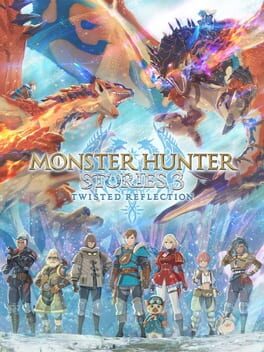
Monster Hunter Stories 3: Twisted Reflection
Capcom
Mar 13, 2026
Twin Rathalos, born in a twist of fate. Two centuries after a conflict that divided neighboring kingdoms, the drums of war are reignited as twin Ra…
The hook here is habitat restoration. Unlike Monster Hunter Stories 2: Wings of Ruin, where you found monster eggs in fixed locations, Twisted Reflection makes the environment responsive to your actions. Restore a forest. Bring back the monsters that used to live there. Watch the ecosystem recover. The result is that every player ends up with a slightly different world based on which habitats they prioritize.
The reward structure ties directly into this system. As you raise the ecosystem rank of an area, you unlock access to rare monster eggs. Dual-element monsters become available. Deviant Monsters from the mainline games like Monster Hunter Rise and Monster Hunter Generations can be hatched if you put in the work to truly restore a region. It transforms collecting Monsties from a treasure hunt into something closer to wildlife conservation.
The Story: Twin Rathalos and a Kingdom at War
The narrative centers on an omen. Two centuries after a war divided neighboring kingdoms, twin Rathalos hatch from a single egg. This species was thought extinct. The omen signals destruction, at least according to prophecy. Your job as a Ranger is to figure out what is actually happening and whether war can be prevented.
Adding to the tension is a phenomenon called the Crystal Encroachment. Strange crystals are spreading across the land, affecting both the environment and the monsters themselves. The residents of Azuria (the kingdom you start in) use these crystals for light, but their origin and effects remain mysterious. The game seems to be setting up an environmental parable alongside its fantasy war story.
Three Distinct Regions
Capcom built each major location with specific cultural influences. Azuria takes inspiration from European fantasy, particularly a Spanish castle called Alcazar de Segovia that also inspired Disney. The castle town sits on a lake with fields and forests stretching to the mountains. Flags shaped like Rathalos wings mark the bond between this kingdom and the endangered species.
Sheparden draws from Eastern and Asian aesthetics, directly connected to Monster Hunter Rise. The village features torii gate structures and traditional architecture. Monsters from Rise inhabit the surrounding area, which should please fans who spent hundreds of hours in that game. One small detail: since this village was not built for Riders, your Rathalos gets stuffed into a cramped unused residence instead of a proper stable.
Galyad is the most visually distinctive. A former ocean port city now surrounded by desert, it shows Mediterranean influences despite its barren landscape. The Lagiacrus fountain in the city center hints at what this place used to be before desertification. Capcom also included class division in the design, with prosperous areas near the center and slum-like sections on the outskirts.
Combat and Monstie Bonding
Turn-based battles return, built around predicting enemy attack patterns and coordinating with your Monstie partners. The rock-paper-scissors foundation from previous games remains, but the addition of dual-element monsters introduces new strategic layers. A fire and ice Monstie opens up different tactical options than a pure fire type.
The open world supports riding in ways that matter for exploration. You can swap Monsties on the fly to access different traversal abilities. One might fly. Another might climb walls. A third might swim. Building a party that covers multiple exploration types becomes as important as building one that covers combat matchups.
Platforms and Release
Monster Hunter Stories 3: Twisted Reflection launches March 13, 2026 on PlayStation 5, Xbox Series X|S, Nintendo Switch 2, and PC via Steam. A demo is available now for those who want to see Azuria before committing.
The price sits at $59.99 USD. Pre-orders include bonus cosmetics, though nothing that affects gameplay.
Who Should Play This
If you bounced off mainline Monster Hunter because the action combat did not click, Stories 3 offers an entry point with completely different mechanics. The turn-based system rewards patience and planning over reaction time. The collecting loop scratches the same itch as Pokemon but with monsters that look genuinely threatening instead of adorable.
Returning Stories fans get the most ambitious entry in the spinoff series so far. The habitat restoration system alone adds enough depth to justify a third game. Whether the environmentalist themes land will depend on the writing, but the mechanical foundation looks solid based on preview coverage.
Monster Hunter has always been about understanding ecosystems, even when the gameplay involved dismembering everything in sight. Twisted Reflection asks what happens when understanding becomes the goal rather than the means. That premise alone makes it one of the more interesting releases this March.