Slay the Spire 2 Early Access: Everything You Need to Know Before March 5
Everything you need to know about Slay the Spire 2 Early Access launching March 5. New characters, co-op mode, and why the roguelike deckbuilder sequel might be the best in the genre.
February 28, 2026 · 8 min read
Numbers guy who also happens to love games. I break down what makes a game worth your money with data, benchmarks, and honest analysis.
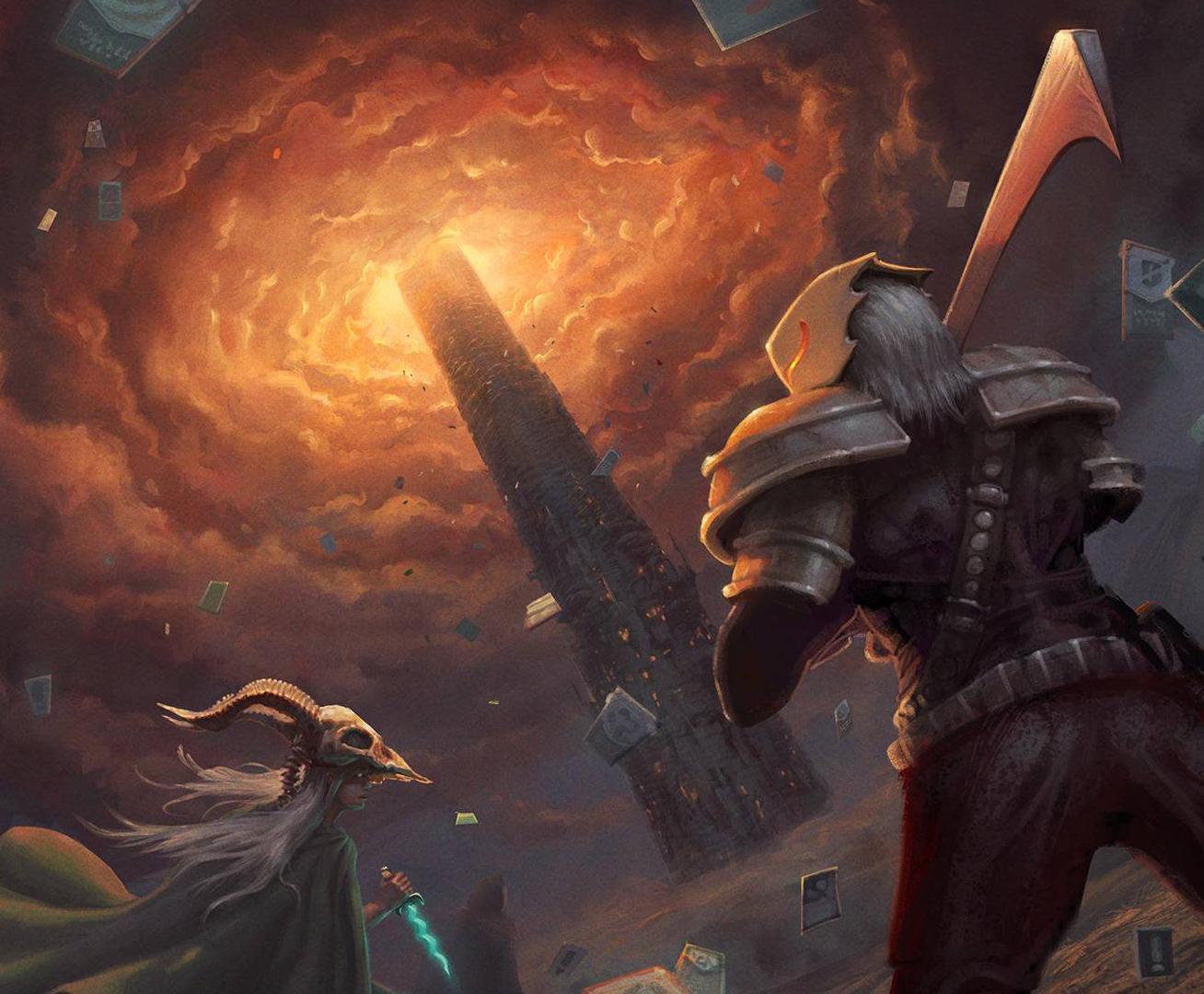
The original Slay the Spire didn't just popularize the deckbuilding roguelike genre. It essentially invented it. Before Mega Crit's 2019 release, the idea of combining card game mechanics with roguelike progression was a niche experiment. Afterward, it became one of the most replicated design templates in indie gaming. Now, seven years later, Slay the Spire II enters early access on March 5, 2026, and the pressure on Mega Crit to follow up their genre-defining debut is enormous.
Why the Sequel Matters
Let's talk numbers for a second. The original Slay the Spire sold over 10 million copies. It spawned an entire subgenre. Games like Monster Train, Inscryption, Balatro, and dozens of others owe direct design debts to what Mega Crit built. The modding community produced thousands of custom characters, relics, and encounters that kept the game alive years past its expected lifespan.
So why make a sequel instead of just continuing to update the original? Mega Crit has been transparent about this. The original game's codebase had reached its limits. Adding new characters or significantly changing core systems required workarounds that introduced instability. A sequel built on modern architecture allows them to implement ideas that were technically impossible in the original, including real-time multiplayer, fully 3D environments, and a modular content system designed for long-term expansion.
That's the technical justification. The creative one is simpler: Mega Crit wanted to take real risks with the formula, and doing that inside a game that millions of players had mastered felt irresponsible. A sequel gives them permission to break things.
What's New in Slay the Spire II
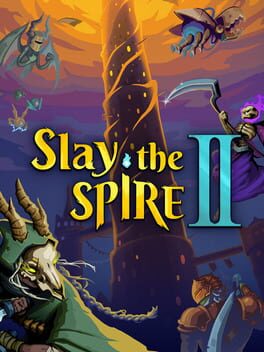
Slay the Spire II
Mega Crit Games
Mar 1, 2026
The iconic roguelike deckbuilder returns. Craft a unique deck, encounter bizarre creatures, and discover relics of immense power in Slay the Spire 2!
The core loop is familiar. You climb through a series of encounters, building a deck of cards from rewards, collecting relics that modify your abilities, and making route decisions on a branching map. If you've played the original, you'll understand the structure immediately. But nearly every system within that structure has been reworked.
The Map: The branching path system has been expanded significantly. Instead of a single vertical climb, the map now features horizontal branching with optional side paths that lead to unique encounters and rewards. These detours cost time, represented by a new resource that limits how many rooms you can visit per act. Efficient pathing becomes a genuine strategic consideration. Do you beeline for the boss with a lean deck, or do you invest time exploring for powerful cards and relics at the risk of entering the boss fight with accumulated fatigue?
Combat: Turn-based card combat returns, but Mega Crit has introduced a spatial element. Enemies now occupy positions on a grid, and many cards have targeting patterns rather than simple single-target or AOE effects. A card might hit all enemies in a column, or deal bonus damage to adjacent targets, or push enemies into different positions. Positioning your attacks around enemy formations adds a tactical layer that the original completely lacked.
The Relic System: Relics function similarly to the original but with a new wrinkle. Certain relics can now be combined at specific event nodes to create hybrid relics with merged effects. This creates an additional layer of decision-making. Do you keep two good relics separate, or gamble on a fusion that might produce something incredible or something mediocre? The fusion outcomes aren't random. They follow internal logic based on the relics' properties, so experienced players can learn to predict results.
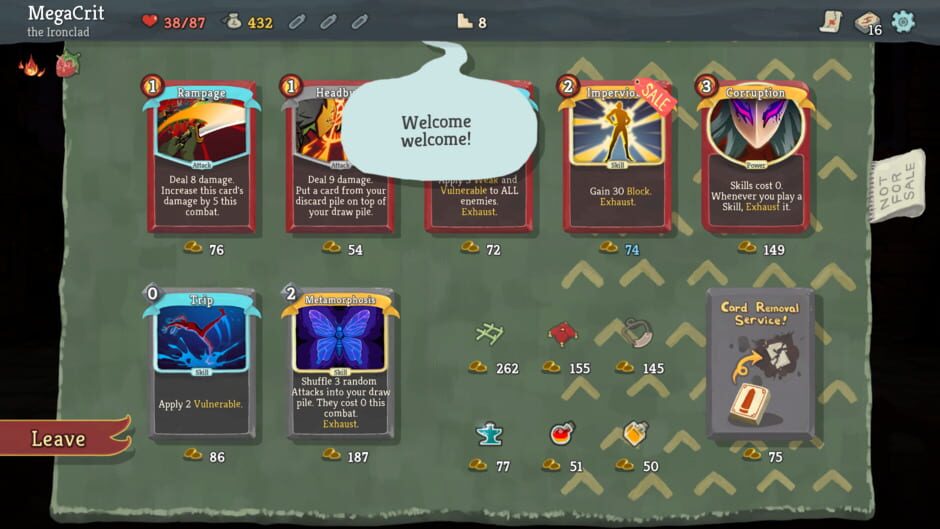
The New Classes
Mega Crit has confirmed three playable classes for the early access launch, with more planned during the early access period and for the full release.
The Invoker: A spellcaster who manages elemental attunements alongside their card hand. Playing fire cards increases your fire attunement, which amplifies subsequent fire cards but also makes you vulnerable to cold damage from enemies. The Invoker's strategy revolves around building attunement stacks in the right element for each encounter while managing the defensive trade-offs. It's complex and rewarding, with a high skill ceiling that theorycrafters will spend months optimizing.
The Vagabond: The most straightforward class, designed as an entry point for new players while still having depth for veterans. The Vagabond uses a tool-based system where certain cards equip temporary items that modify subsequent plays. Equip a shield, and your next attack card also blocks. Equip a whetstone, and your next three attack cards deal bonus damage. Sequencing tools and attacks in the right order creates satisfying combo chains.
The Symbiont: This is the weird one, and I love it. The Symbiont has two health pools representing the host and the parasite. Cards are played from a shared deck but affect each entity differently. Some cards sacrifice host health to empower the parasite, while others do the reverse. The parasite has its own passive abilities that trigger based on its health percentage, creating a constant risk-reward tension about how low you're willing to let either health pool drop. It's a fascinating design that has no direct parallel in the original game or its imitators.
Early Access Scope
Mega Crit has outlined exactly what's included in the early access launch and what's coming later. Transparency like this is appreciated.
Included at launch:
- Three playable classes (Invoker, Vagabond, Symbiont)
- Three full acts with unique bosses, enemies, and events
- Over 300 cards across all classes
- Over 100 relics, including class-specific and universal options
- The new map system with side paths and time management
- Daily challenge runs with leaderboards
- Full modding support via an official toolkit
Planned for the early access period:
- At least two additional playable classes
- A fourth act and final boss
- Co-op multiplayer (the most requested feature from the community)
- Expanded event pool and additional relics
- Ascension difficulty system (returning from the original with new modifiers)
Mega Crit estimates the early access period will last approximately 12 to 18 months, based on their experience with the original game's development timeline. They've emphasized that the early access build is stable and content-complete enough to provide a full gameplay experience. This isn't a beta test. It's a finished game that will get bigger.
Pricing and Platforms
Slay the Spire II launches at $29.99 on Steam, with Mac and Linux support available from day one. Mega Crit has confirmed the price will increase when the game leaves early access, so early adopters get a discount for their faith. Console versions for PlayStation 5, Xbox Series X|S, and Nintendo's platforms are planned for the full release but have no confirmed dates.
The $29.99 price point feels right. It's lower than the original's launch price adjusted for inflation, and it acknowledges that the game isn't complete yet. Mega Crit isn't charging full price for an early access product, which is increasingly rare and worth noting.
System requirements are modest. The original ran on basically anything, and while the sequel's 3D environments are more demanding, Mega Crit has prioritized broad hardware compatibility. A dedicated GPU from the last six years should handle it without issues. An integrated graphics solution might struggle with the new particle effects during intense encounters, but a low-settings option is available that strips visual flair without affecting gameplay clarity.
Should You Buy at Early Access Launch?
Here's my honest assessment. If you put more than 100 hours into the original Slay the Spire, yes. Buy it on March 5. The new classes are interesting enough on their own to justify the price, and the spatial combat system adds strategic depth that keeps the formula feeling fresh rather than iterative. You'll burn through the available content faster than a casual player, but the daily challenges and modding support will extend things significantly.
If you're newer to the genre or bounced off the original, waiting is reasonable. The full release will have more classes, more content, and the co-op mode that could be a major draw. Early access games always benefit from patience, and Mega Crit's track record suggests the finished product will be substantially richer than the initial offering.
What I can say with confidence is that the underlying design is strong. Mega Crit clearly understands what made the original special, and they've made additions that enhance rather than dilute those qualities. The spatial combat could have felt gimmicky, but it's integrated so naturally that going back to flat targeting feels limiting. The Symbiont class alone is the kind of creative design that reminds you why Mega Crit earned their reputation.
March 5 is going to be a good day for deckbuilder fans. Mark your calendars.