NVIDIA GeForce ON GDC 2026: DLSS 4.5, Path Tracing, and Quake III RTX
DLSS 4.5 Dynamic Multi-Frame Generation launches March 31st. Path tracing confirmed for 007 Last Light, Control Resonant, Pragmata. Quake III Arena RTX Remix demo available now.
Indie game enthusiast and pixel art admirer. I play everything so you don't have to — but you'll want to after reading my picks.
NVIDIA just dropped a lot at GDC 2026, and for PC gamers, the March 31st date matters most. That is when DLSS 4.5 Dynamic Multi-Frame Generation goes live, bringing the "intelligent frame gen" feature that NVIDIA teased at CES. Instead of blindly doubling or tripling your framerate, the system now targets your monitor's actual refresh rate, generating exactly the frames needed to match. Simple concept, probably nightmarish to implement, but the implications for VRR displays are significant.
The rest of the presentation covered path tracing expansion, RTX Remix updates, GeForce NOW improvements, and some genuinely surprising game announcements. Here is everything worth knowing.
DLSS 4.5 Dynamic MFG Arrives March 31st
Multi-Frame Generation has been controversial since its introduction. Critics argue that artificially inflating framerates introduces latency and can create visual artifacts during fast motion. NVIDIA's response with Dynamic MFG is elegant: stop generating frames you do not need.
If your native framerate sits at 85 FPS and your display runs at 144Hz, Dynamic MFG generates exactly the interpolated frames required to hit that target. No more, no less. This should reduce input latency compared to the "generate as many as possible" approach of previous implementations. It also means your GPU spends less power on frames that would just get discarded anyway.
The March 31st launch gives developers time to integrate the feature, though expect the usual rollout pattern: a handful of supported titles at launch, more added monthly.
Path Tracing Expands to Major 2026 Releases
Path tracing support is becoming standard for high-end PC releases, and NVIDIA showcased several notable additions at GDC.
007 Last Light, IO Interactive's James Bond game, launches with full path tracing support. This marks the franchise's first video game appearance since 2012, and IO is clearly building on the technical foundation established with their Hitman trilogy. Given how good those games looked with traditional rendering, path tracing should make the spy thriller visually striking.
Resident Evil 9 and Capcom's upcoming Pragmata both feature path tracing, continuing Capcom's push toward physically accurate lighting in their RE Engine titles. No surprises there. Capcom has been aggressive about implementing ray tracing across their catalog.
The more interesting announcement is Control Resonant. Remedy's follow-up to Control is a fast-paced brawler with large open environments, neither of which traditionally suit path-traced rendering due to performance demands. Remedy pulled off impressive RT work in Alan Wake 2, so they have the technical chops, but maintaining playable framerates in a brawler with complex lighting will be a different challenge entirely.
RTX Mega Geometry Makes Forests Possible
NVIDIA highlighted RTX Mega Geometry as the tech enabling dense vegetation in path-traced games. The numbers from Alan Wake 2 are concrete: 300MB VRAM savings and up to 20% performance improvement when enabled.
Mega Geometry optimizes how the GPU tests ray intersections against complex geometry. Rather than testing every triangle, it uses smarter spatial data structures to reject large chunks of geometry early. For scenes with millions of triangles, like dense forests, this matters enormously.
The Witcher 4 is confirmed to use Mega Geometry for its forest environments. CD Projekt Red showed brief footage of incredibly lush woodland scenes running with path tracing. Whether those framerates hold up in actual gameplay remains to be seen, but the visual density is impressive.
RTX Remix Gets Quake III Arena
Quake III Arena
id Software · Electronic Arts
Dec 2, 1999
Welcome to the Arena, where high-ranking warriors are transformed into spineless mush. Abandoning every ounce of common sense and any trace of doub…
NVIDIA's RTX Remix modding toolkit continues to breathe new life into classic games. Recent community projects include Need for Speed: Carbon, Portal Stories: Mel, and Call of Duty 2, all in varying states of completion.
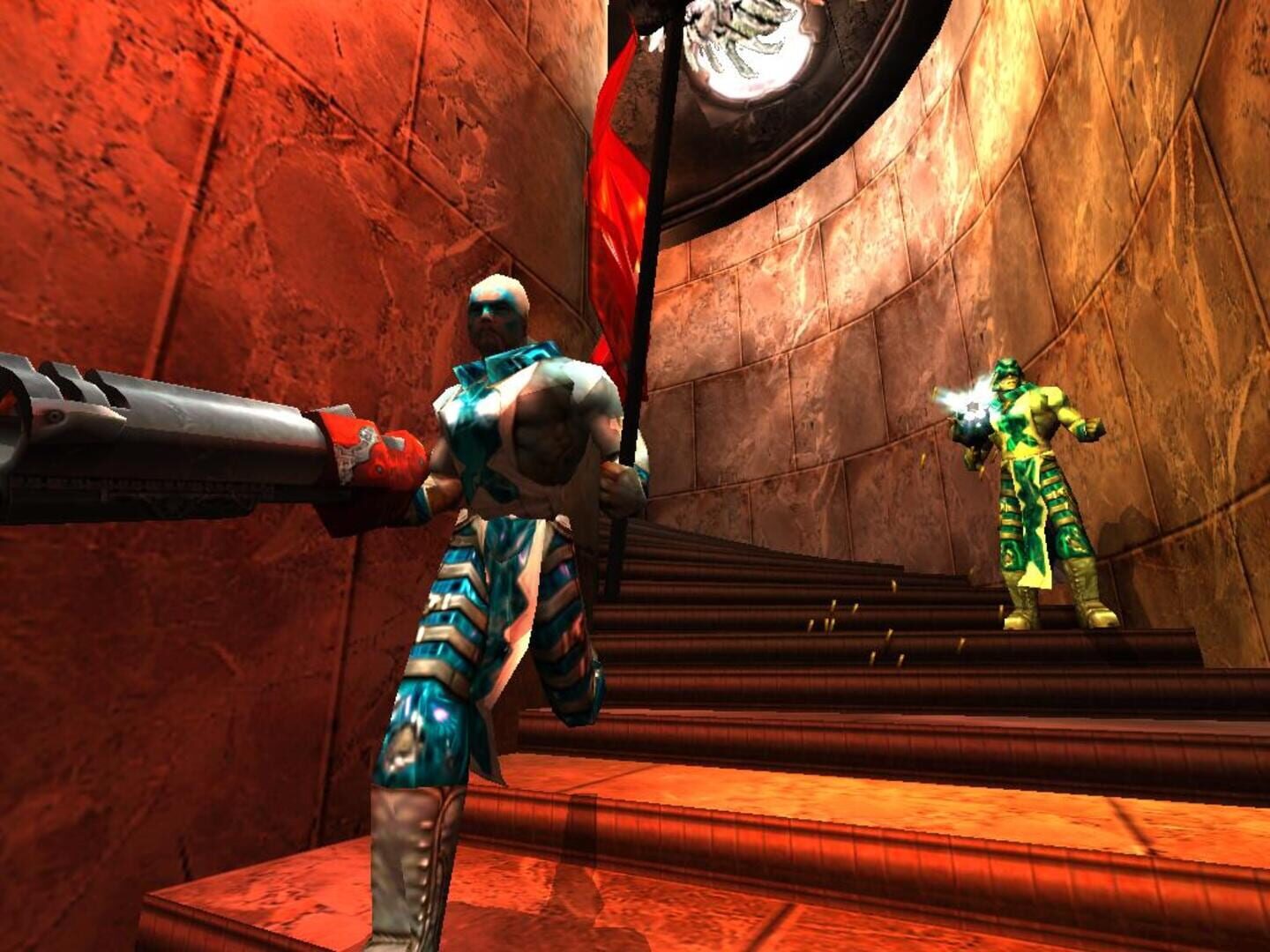
The headline project is an official Quake III Arena RTX Remix mod, apparently backed by NVIDIA funding. This goes beyond just lighting upgrades, the team has remodeled assets and updated textures throughout. NVIDIA is using this mod to debut new RTX Remix runtime features: advanced particle effects with dynamic animations, randomized elements, and complex physics including attraction, repulsion, wind, air resistance, and collision models.
A 15-level demo is available now for free, though you need to own the original Quake III Arena to play it. GOG has it for six dollars if you missed the original release.
GeForce NOW Improvements
NVIDIA's cloud gaming service announced several updates for subscribers:
- Single sign-on for Gaijin Entertainment (War Thunder) and GOG arriving next month
- VR upgraded to 90 FPS on Meta Quest and Apple Vision Pro
- Game library icons now indicate Xbox Game Pass and Ubisoft+ titles
New games joining the service include Active Matter, Samson: A Tyndalston Story, Control Resonant, Crimson Desert, and Resident Evil Requiem.
For developers, NVIDIA introduced Cloud Playtest, a feature allowing studios to run internal, external, and press playtests directly through GeForce NOW. The system can capture gameplay footage, webcam feeds, and controller inputs with full scheduling capabilities. Activision, 2K, TechLand, Ubisoft, and WB are already using it.
What This Means for PC Gaming
The DLSS 4.5 Dynamic MFG launch on March 31st is the practical highlight here. Frame generation has always felt like a brute force solution, and this refinement addresses legitimate criticisms about unnecessary latency and wasted GPU cycles.
Path tracing continues its slow march toward ubiquity. Every major engine supports it now, every AAA publisher implements it, and the performance gap between ray-traced and traditional rendering narrows with each hardware generation. We are probably two GPU generations away from path tracing being the default expectation rather than a premium feature.
The RTX Remix Quake III project demonstrates that NVIDIA sees value in keeping classic games relevant. Whether that translates to official remasters or just continued community support remains unclear, but the particle physics additions suggest NVIDIA is treating Remix as a serious platform rather than a novelty.