The Best JRPGs to Play in 2026
We're in something of a golden age for JRPGs right now, and I don't say that lightly. I've been playing these games since renting Final Fantasy IV from Blockbuster in the early '90s, and the genre ...
February 28, 2026 · 12 min read
Mom of two, gamer for life. I find the best games you can actually finish between school runs and bedtime stories.
We're in something of a golden age for JRPGs right now, and I don't say that lightly. I've been playing these games since renting Final Fantasy IV from Blockbuster in the early '90s, and the genre has had plenty of peaks and valleys over the decades. But the current moment feels different. Atlus is firing on all cylinders. Square Enix is taking real creative risks. Smaller studios are reviving classic formulas with modern design sensibility. Whether you're a lapsed fan who hasn't touched the genre since the PS2 era or someone who played through Persona 5 and wants to know what's next, 2026 is an excellent time to be investing eighty hours into a party-based adventure. Here's where to spend that time.
The Modern Masterworks
These are the games defining what JRPGs look like right now. They push the genre forward while understanding what made it work in the first place.
Persona 5 Royal

Persona 5 Royal
Atlus · Sega
Oct 31, 2019
An enhanced version of Persona 5 with some new characters and a third semester added to the game. Released Internationally in 2020.
Persona 5 Royal is the most stylish game ever made. That's not hyperbole. Every menu transition, every battle animation, every screen in this game is dripping with a visual confidence that no other studio has been able to match. The acid jazz soundtrack burrows into your brain and stays there for months. And underneath all that style is a genuinely excellent 100-plus hour RPG about a group of teenagers fighting back against a corrupt society by literally stealing the distorted desires of terrible adults.
The Royal version added a significant third-semester arc that elevates the entire narrative. Without spoiling anything, the new content introduces a character and a moral question that recontextualizes everything you've done up to that point. It also added quality-of-life improvements that smooth out the original game's rough spots, like better baton pass mechanics and the ability to do more activities in a single evening. If you played the vanilla Persona 5 but never got to Royal, the third semester alone justifies a replay.
The social simulation layer is what separates Persona from its peers. You're not just grinding dungeons. You're attending school, working part-time jobs, building relationships, and managing a calendar that always feels too short. Every in-game day forces you to choose between activities that all feel important, and that tension between wanting to do everything and having limited time creates a compulsion loop that's almost unfair in its effectiveness. I've finished this game twice and I'm still not sure I made the right choices. That's the mark of something special.
Metaphor: ReFantazio

Metaphor: ReFantazio
Studio Zero · Atlus
Oct 11, 2024
From the creative minds of the Persona series – Metaphor: ReFantazio marks ATLUS’ first ever, full-scale fantasy RPG, brought to you by director Ka…
When Atlus announced that the Persona team was making a fantasy RPG, expectations were enormous. Metaphor: ReFantazio doesn't just meet them. It establishes a new franchise that could easily run for decades. The game takes Persona's social link system and calendar-based structure and transplants it into a high-fantasy setting inspired by European mythology and political philosophy. The result feels both familiar and genuinely new, which is a hard balance to strike.
The combat system builds on the Press Turn foundation that Atlus perfected in Shin Megami Tensei, adding an archetype class system that lets you mix and match abilities across jobs in ways that feel endlessly customizable. There's a real strategic depth here that rewards experimentation. Stacking specific archetype combinations creates synergies that can trivialize tough fights or open up entirely new approaches to boss encounters. The game wants you to engage with its systems, and it rewards you handsomely when you do.
What impressed me most is the worldbuilding. The game's fantasy kingdom is dealing with racism, class warfare, and political corruption, but it handles these themes with surprising nuance. Your party members have opinions about the world that don't always align, and the game doesn't always tell you who's right. For a genre that often defaults to "the power of friendship solves everything," Metaphor's willingness to sit in moral complexity feels mature and earned. The main story runs about 80 hours, and I wanted more when it ended. That rarely happens with games this long.
Final Fantasy VII Rebirth
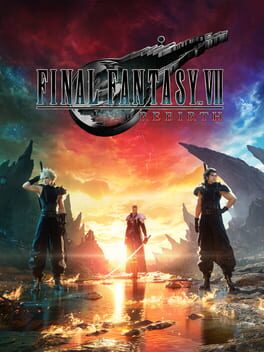
Final Fantasy VII Rebirth
Square Enix Creative Business Unit I · Square Enix
Feb 29, 2024
Final Fantasy VII Rebirth is the new story in the Final Fantasy VII remake project, a reimagining of the iconic original game into three standalone…
Final Fantasy VII Rebirth is the middle chapter of Square Enix's ambitious remake trilogy, and it does what middle chapters do best: it opens up the world. Where Remake was confined to Midgar's claustrophobic corridors, Rebirth takes you across the entire planet, from the grassy plains outside Kalm to the golden beaches of Costa del Sol. The sense of scale is impressive, and the game earns its open-world moments by filling them with meaningful content rather than icon-chasing busywork.
The combat system, already excellent in Remake, gets refined further here. Synergy abilities between party members add a cooperative layer that makes you think carefully about team composition. The character action feels weighty and responsive, and switching between party members mid-fight keeps encounters dynamic. Cloud's sword still feels incredible to swing, and the materia system gives you enough build diversity to experiment across the 60-plus hour runtime.
I'll be honest about the flaws, though. Rebirth has a pacing problem. Some of the open-world regions feel padded with minigames and side content that ranges from charming to tedious. The Gold Saucer section goes on about three hours longer than it needs to. And the story's relationship to the original game's events has become complicated in ways that will genuinely frustrate purists. But when Rebirth is firing, during its best story beats and most intense boss fights, it's spectacular. The ending alone will be debated for years.
Deep Cuts for Genre Veterans
These are the games you pick up when you've finished the marquee releases and you want something that commits fully to what makes JRPGs tick. Longer runtimes, deeper systems, and stories that take their time.
Xenoblade Chronicles 3
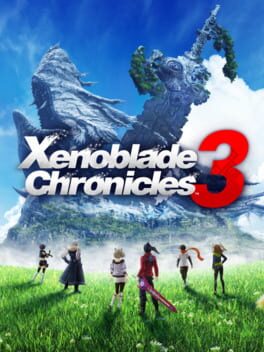
Xenoblade Chronicles 3
Monolith Soft · Nintendo
Jul 29, 2022
A vast world awaits in Xenoblade Chronicles 3, the next game in the acclaimed RPG series from developer Monolithsoft. Players will step into the ro…
Xenoblade Chronicles 3 is an 80-hour JRPG with a 150-hour ceiling if you chase the side content, and somehow it earns nearly every hour. The story follows six soldiers from warring nations who discover that their endless conflict is manufactured, and the way it explores themes of mortality and the meaning of a finite life is genuinely philosophical without being pretentious. Monolith Soft wrote characters that I cared about deeply, which matters when you're spending this much time with them.
The combat system is the most refined version of Xenoblade's real-time MMO-inspired battle system, with class swapping, chain attacks, and a party of seven characters creating layered encounters that feel chaotic until you learn to read them. The class system allows massive customization, letting you mix abilities from different roles to create hybrid builds that suit your playstyle. It takes about ten hours before combat really clicks, which is a legitimate barrier. But once it clicks, there's nothing else quite like it in the genre. The Expansion Pass DLC, Future Redeemed, is also essential, tying together all three Xenoblade games in ways that are immensely satisfying if you've been along for the full ride.
Octopath Traveler II
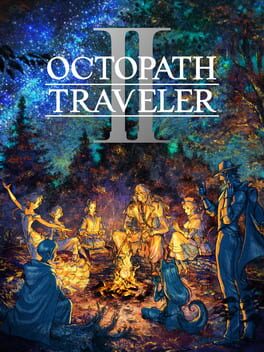
Octopath Traveler II
ACQUIRE Corp. · Square Enix
Feb 24, 2023
This game is a brand-new entry in the Octopath Traveler series. It takes the series’ HD-2D graphics, a fusion of retro pixel art and 3DCG, to even …
Octopath Traveler II fixes nearly every problem with the first game while keeping everything that worked. The HD-2D art style is gorgeous, combining pixel art characters with painterly 3D backgrounds to create something that looks like your memory of SNES RPGs rather than the actual reality. The eight protagonists each have their own storylines, but unlike the first game, those stories actually intersect and build toward a shared conclusion that ties everything together.
The Break and Boost combat system remains one of the smartest turn-based battle systems in the genre. Exploiting enemy weaknesses to break their shields, then boosting your attacks during the vulnerability window, creates a satisfying rhythm that keeps random encounters engaging rather than tedious. Each character's path abilities also add exploration variety, like the thief who can steal items from NPCs or the scholar who can learn enemy weaknesses on sight. It runs about 60 hours for the main stories, with another 20 or so for the postgame content. If you miss the feeling of classic SNES-era JRPGs but want modern quality-of-life design, this is the one.
Action-Forward JRPGs
Like a Dragon: Infinite Wealth
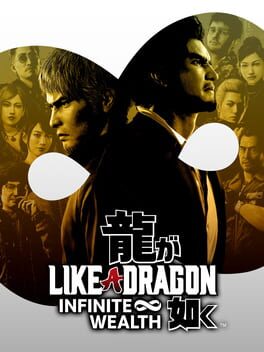
Like a Dragon: Infinite Wealth
Ryu Ga Gotoku Studios · Sega
Jan 26, 2024
Like a Dragon: Infinite Wealth is a turn-based role-playing game developed by Ryu Ga Gotoku Studio and published by Sega. It follows dual protagoni…
The Yakuza series rebranded to Like a Dragon and simultaneously switched from beat-em-up combat to turn-based JRPG battles, and somehow it worked. Infinite Wealth doubles down on that identity shift with a sprawling adventure that splits time between Yokohama and Hawaii. The turn-based combat is surprisingly deep, with party positioning, environmental hazards, and job classes that reference classic JRPG archetypes while adding the series' signature absurdist humor.
But the real draw is the storytelling. RGG Studio writes characters with a warmth and humanity that most JRPG developers can't match. Ichiban Kasuga is one of gaming's most likable protagonists precisely because he's an earnest dork in a world full of hardened criminals. His relationships with party members feel genuine, and the game gives you dozens of hours of substories and side content that flesh out the cast in ways the main plot doesn't have time for. The Dondoko Island life sim minigame alone could have been a standalone release. At around 60 hours for the main story and easily 100-plus for completionists, this is a massive JRPG that never feels like it's wasting your time.
Granblue Fantasy Relink

Granblue Fantasy: Relink
Cygames Osaka · PLAION
Feb 1, 2024
A grand adventure in the skies awaits! Form a party of four from a diverse roster of skyfarers and slash—or shoot or hex—your way to victory agains…
Granblue Fantasy Relink surprised a lot of people by being genuinely excellent. The action combat is fluid and responsive, with each character playing distinctly enough that switching your main between missions feels like playing a different game. The visual style is one of the best implementations of anime-inspired 3D graphics in any game, with character models that look like hand-drawn illustrations in motion. The story is serviceable fantasy fare, nothing groundbreaking, but the postgame endgame content provides dozens of hours of challenging hunts for players who enjoy optimizing builds and chasing gear. Think of it as a JRPG-flavored Monster Hunter with a gorgeous coat of paint.
The Strategy Pick
Fire Emblem Engage

Fire Emblem Engage
Intelligent Systems · Nintendo
Jan 20, 2023
Become the Divine Dragon and save the continent of Elyos! Summon valiant heroes like Marth & Celica alongside a new cast of characters and engage …
Fire Emblem Engage made a deliberate choice: prioritize tactical gameplay above all else. The story and characters are noticeably weaker than Three Houses, leaning into anime tropes without the political complexity that made its predecessor so compelling. If you're coming to Fire Emblem primarily for the narrative, Engage will disappoint you. I won't pretend otherwise.
But the map design. The actual tactical gameplay is the best the series has ever produced. Each chapter presents a distinct strategic puzzle with terrain considerations, reinforcement timings, and enemy compositions that demand careful planning. The Emblem Ring system, which lets you summon and fuse with heroes from past Fire Emblem games, adds a build-crafting layer that's addictive once you start theory-crafting optimal pairings. The difficulty curve on Maddening mode is one of the fairest and most rewarding challenges in modern strategy RPGs. If you can accept a weaker narrative in exchange for the tightest tactical combat in the series, Engage delivers on that trade completely.
The JRPG genre has never been more varied than it is right now. You can play a stylish social sim about teenage rebellion, a politically charged fantasy epic, a nostalgic throwback with modern polish, or a Hawaiian vacation with turn-based combat. The common thread across all these recommendations is respect for the player's investment. These are long games that ask for serious time commitments, and every one of them rewards that commitment with memorable characters, satisfying systems, and stories worth seeing through to the end. Pick the one that speaks to you and clear your calendar. You're going to need it.